


Significant progress in people with type 2 diabetes (T2D) on basal insulin1


A first-of-its-kind RCT demonstrated that the Libre 3 system significantly improved HbA1c and Time in Range by supporting patient self-management, even without HCP intervention.1

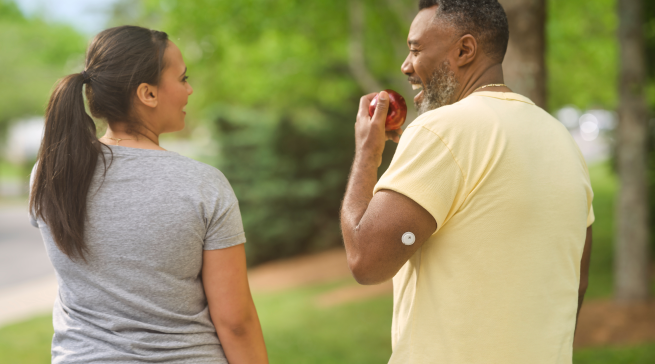
A man walking outdoors and eating an apple, he has a visible sensor on his arm

Most people with T2D on basal insulin remain uncontrolled.²

Many people with T2D on basal insulin continue to struggle to achieve glycaemic targets. Meanwhile, the high burden of cardiovascular and kidney comorbidities has led to increased use of therapies with proven cardiorenal benefits.³

This highlights the need for more clinically actionable data in adults with T2D on basal insulin who are receiving additional glucose-lowering therapies.

 

~70%

of people with T2D treated with basal insulin are above HbA1c targets.4
 

Can CGM improve glycaemic outcomes by supporting self-management?

A landmark RCT evaluated the Libre 3 system in adults with suboptimally controlled T2D treated with basal insulin and SGLT2i and/or GLP-1 RA.¹

Across distinct self-management and clinician-supported phases, the study assessed:1

Glucose graph icon

HbA1c and Time
in Range

Proactive behaviour changes icon

Proactive
behaviour changes

Psychosocial improvements icon

Psychosocial
improvements

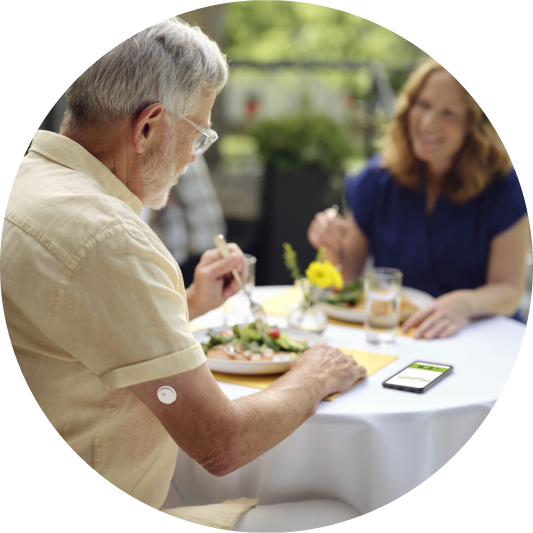
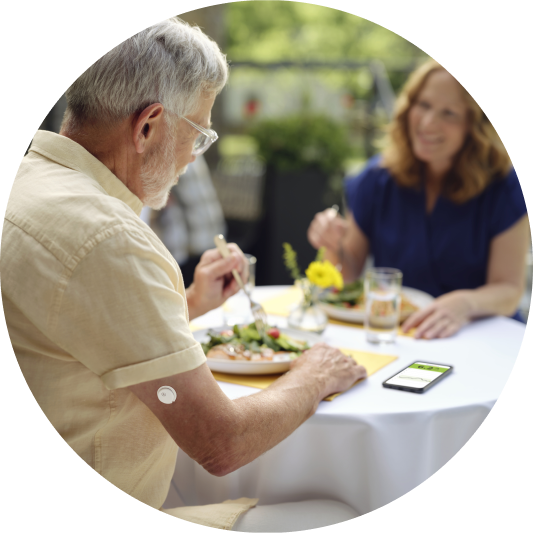
Man eating outdoors with a visible sensor on his arm Man eating outdoors with a visible sensor on his arm Man eating outdoors with a visible sensor on his arm

Improved glycaemic control

The Libre 3 system achieved clinically and statistically significant improvements in HbA1c and Time in Range without HCP intervention.¹

Time in Range improved overall, in waking hours and overnight, with no increase in hypoglycaemia.1

HbA1c improvements were clinically and statistically significant at 16 weeks, and sustained through 32 weeks.1

by 16 weeks on the Libre 3 system vs. 27% on SMBG group (p<0.0001).1


Behaviour change associated with long-term glycaemic benefits

Real-time glucose feedback supported behavioural change and glycaemic outcome improvements in people with T2D on basal insulin.1

Healthier dietary choices1,5

Increased light-intensity physical activity1,5
 

Improved hypoglycaemic confidence1

Reduced emotional burden1

First-of-its-kind evidence in people with T2D on basal insulin

This landmark RCT supports expanding the role of CGM in people living with type 2 diabetes.1
In adults treated with basal insulin, the Libre 3 system demonstrated:

Improved glycaemic control

without changes in therapy1

Behavioural changes

associated with long-term
glycaemic benefits1

Reduced emotional burden

related to diabetes management1

Explore further evidence below

Download the study summary and explore more supporting clinical evidence. To learn more, contact an Abbott representative or order a sensor today.

References & Disclaimers

Images are for illustrative purposes only. Not real patients, healthcare professionals, or data.

RCT=Randomised controlled trial
SMBG=Self-monitoring of blood glucose
T2D=Type 2 diabetes
TIR=Time in Range
GLP-1 RA=Glucagon-like peptide-1receptor agonist
SGLT2i=Sodium-glucose cotransporter-2 inhibitors
T1D=Type 1 diabetes

1. Wilmot, E. G. The Lancet Diabetes and Endocrinology (2026): https://doi.org/10.1016/S2213-8587(26)00076-8

2. Data on file. Abbott Diabetes Care, Inc.

3. Davies, M. J. Diabetologia (2022): https://doi:10.1007/s00125-022-05787-2.

4. Interface audit data analysis, data held on file at Abbott. 

5. This effect was recorded at 16 weeks (Phase A, self-management); no statistically significant difference at 32 weeks (Phase B, clinician-supported care).

ADC-2691922 v1.0


Loading...